Image courtesy of Nick Sheehan
Museum Opening Times
Tuesday 9.00am - 12.00noon
Wednesday 1.00pm - 4.00pm
Saturday 1.00pm - 4.00pm
Other Times by Appointment.
Group Bookings Welcome
Phone 02-66453416
Please CASH only Entry

Come and visit our stall at Maclean Community Markets 2nd Saturday each month.
Formed in 1969 the Maclean District Historical Society has actively collected artifacts and researched the history relevant to this unique area. Much of the collection is on display either in the Stone Cottage or the Bicentennial Museum. Each of these buildings is an integral part of the Society, the Stone Cottage being the original building on the site dating back to 1889, whilst the Museum was constructed with Federal Government assistance in the form of a grant in the Bicentennial Year of 1988. Apart from managing the collection, our volunteers have been and are currently conducting research into the history of the original inhabitants, the early settlers, and local history of this area.
The Maclean District Historical Society is totally run by volunteers.
The volunteers:
- prepare, set up and maintain the Museum displays and the collection
- research and collate family histories to see the list of 10,000 + family names, click here.
- research, collate and publish the history of local organisations, industries and localities.
- produce a quarterly newsletter, "The Clarence River Advocate".
- fund raise through market stalls and sale of publications.
- staff the Museum 3 days a week.
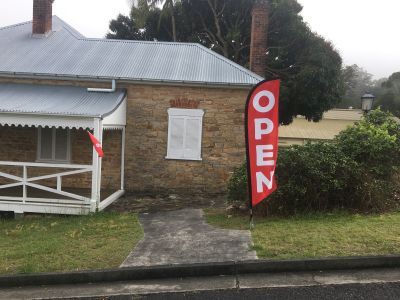
If the flags are up we are open